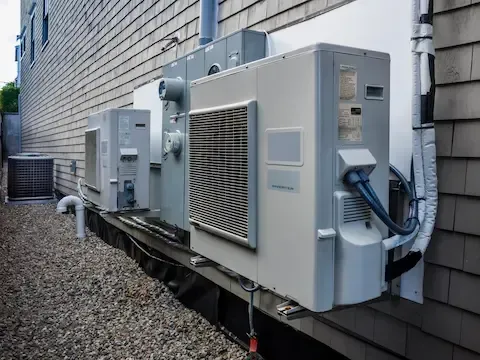
Do Heat Pumps Work Below Freezing in Woodburn Oregon?
Yes, heat pumps work below freezing in Woodburn, Oregon. Modern cold-climate heat pumps extract heat from outdoor air even when temperatures drop to 0°F or below. In Woodburn, where winter lows typically stay in the upper 20s to mid-30s°F, a properly sized heat pump will handle the vast majority of your heating season without backup. The technology has advanced significantly over the past decade, and the mild, wet winters of the Willamette Valley are actually well-suited to heat pump performance. Cold snaps do occur, but they are short-lived and manageable with the right system setup.
How Do Heat Pumps Extract Heat When It Is Cold Outside?
Heat pumps do not generate heat by burning fuel. Instead, they move heat that already exists in the outdoor air into your home. Even at 20°F, outdoor air contains thermal energy that a refrigerant-based system can absorb and concentrate. The refrigerant inside the outdoor unit evaporates at very low temperatures, absorbs that ambient heat energy, and then compresses it to a higher temperature before transferring it indoors. Standard heat pumps begin losing efficiency around 35°F to 40°F. Cold-climate models, sometimes called hyper-heat or extreme-heat units, maintain strong output down to 5°F and produce some usable heat even at -13°F. If you are considering a Heat Pump for your Woodburn home, understanding this operating range helps you match the right equipment to your actual climate conditions.
What Are Woodburn Oregon's Actual Winter Temperatures?
Woodburn sits in Marion County in the northern Willamette Valley, roughly 25 miles south of Portland. The climate here is classified as oceanic, which means winters are cool and wet rather than severely cold. Average January lows hover around 33°F to 36°F. Hard freezes below 25°F happen but typically last only a few nights before temperatures moderate again. The Woodburn area rarely sees extended cold stretches that push past 20°F for more than 24 to 48 hours at a time. Snow accumulation is uncommon, and ice events are more likely than deep freezes. This climate profile puts Woodburn squarely in the ideal operating range for a standard heat pump, and well within the comfortable efficiency range of any cold-climate model on the market today.
At What Temperature Does a Heat Pump Stop Being Efficient?
Efficiency is measured by the coefficient of performance, or COP. At 47°F, a modern heat pump might deliver 3 to 4 units of heat for every unit of electricity consumed. As temperatures drop, COP decreases. A standard unit at 17°F might deliver a COP of 1.5 to 2.0, which is still more efficient than electric resistance heating but noticeably reduced. Cold-climate models maintain a COP above 2.0 down to around 5°F. Below that threshold, the system may run near a 1:1 ratio, meaning it performs similarly to a basic electric heater. For Woodburn residents, this efficiency drop-off rarely becomes a real-world concern because sustained temperatures in that range are uncommon. Most households see the heat pump running at good efficiency for 95 percent or more of the heating season.
Does a Heat Pump Need a Backup Heating Source in Woodburn?
Many heat pump installations include a backup or auxiliary heat source, typically electric resistance strips built into the air handler or a gas furnace in a dual-fuel configuration. In Woodburn's climate, backup heat is used sparingly. It kicks in automatically when outdoor temperatures drop below the system's balance point, which is the temperature at which the heat pump alone cannot meet the home's heating demand. For a well-insulated Woodburn home with a properly sized system, that balance point might be around 20°F to 25°F. On the rare nights when temperatures dip that low, the backup runs briefly and then the heat pump resumes primary duties when temperatures rise. You can read more about how this compares to other heating options in this comparison of Heat Pump versus furnace systems for Woodburn homes.
What Happens When a Heat Pump Freezes Over?
Ice buildup on the outdoor coil is normal and expected in cold, humid conditions like those common in Woodburn winters. The system addresses this automatically through a defrost cycle. The heat pump temporarily reverses its operation to push warm refrigerant through the outdoor coil and melt accumulated frost. During defrost, indoor air may feel cooler briefly, and backup heat often activates to maintain comfort. A properly functioning defrost cycle runs for a few minutes every 30 to 90 minutes during icy conditions and then returns the system to normal heating. Problems occur when the defrost cycle fails, when drainage is blocked, or when ice accumulates beyond the coil to the point where airflow is restricted. If you see heavy ice buildup that does not clear within a couple of hours, that warrants a service call.
Are There Heat Pump Models Specifically Suited to Pacific Northwest Winters?
Yes. Manufacturers like Mitsubishi, Daikin, Bosch, and Carrier offer cold-climate product lines engineered for exactly the kind of wet, moderately cold winters that the Woodburn area experiences. These units feature variable-speed compressors that modulate output rather than cycling fully on and off. That variable operation means the system runs more continuously at lower capacity during mild weather, which is efficient and effective for Woodburn's long, cool, damp shoulder seasons in fall and spring. At lower temperatures, the compressor ramps up to maintain output. For a home in Woodburn that currently relies on a gas furnace or electric baseboard heating, upgrading to a cold-climate heat pump typically results in lower annual energy costs and improved indoor comfort during the heating months.
How Should You Size a Heat Pump for Woodburn's Climate?
Sizing is one of the most important decisions in a heat pump installation. An oversized unit short-cycles, meaning it turns on and off too frequently, which reduces efficiency and causes uneven temperatures. An undersized unit struggles to keep up on cold days. Proper sizing requires a Manual J load calculation that accounts for your home's square footage, insulation levels, window area and orientation, air sealing, and local design temperatures. For Woodburn, the design temperature used for heating calculations is typically around 22°F to 25°F, reflecting the coldest conditions the system is expected to handle reliably. An HVAC contractor familiar with Marion County conditions will use local climate data rather than generic regional averages to size your system correctly. Requesting this calculation in writing before agreeing to installation is a reasonable and recommended step.
What Are the Most Common Misconceptions About Heat Pumps in Cold Weather?
The most widespread misconception is that heat pumps simply stop working in freezing temperatures. This was more accurate for older systems from the 1980s and 1990s, but modern equipment has transformed what is possible. A second common misunderstanding is that defrost cycles indicate a system malfunction. Seeing your outdoor unit steam briefly during cold weather is normal operation, not a sign of failure. A third misconception is that a heat pump in a place like Woodburn will leave you cold during a hard freeze. With proper sizing, good insulation, and a functioning backup heat element, comfort is maintained even on the coldest nights the Willamette Valley typically produces. Understanding these facts helps Woodburn homeowners make confident decisions about whether a heat pump is the right choice for their home.

