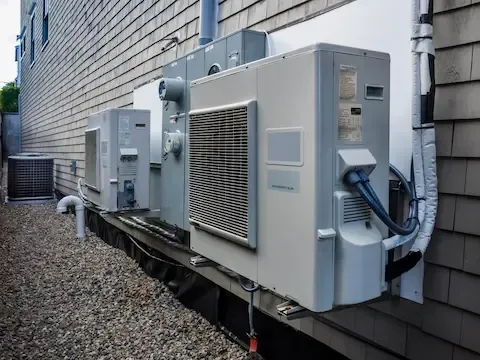
Heat Pump vs Furnace Showdown for Woodburn Households
Choosing a heating system is one of the more consequential home decisions you will make in Woodburn. The upfront cost, the monthly energy bill, the comfort on a cold January morning, and the long-term maintenance picture all hang on that single choice. With natural gas prices fluctuating and electric utility rates shifting alongside expanding grid capacity, the old assumption that a gas furnace always wins the cost battle no longer holds in every situation. This guide breaks down the heat pump versus furnace comparison through the specific lens of Woodburn's climate, local energy infrastructure, and the practical realities of homes in the Willamette Valley.
Understanding How Each System Works
A gas furnace burns natural gas to produce heat, which a heat exchanger transfers to your home's air supply. It is a combustion-based system that generates its own heat energy. A heat pump, by contrast, does not create heat — it moves heat that already exists in outdoor air into your living space. Even at moderately cold temperatures, outdoor air contains usable thermal energy that a heat pump can extract and concentrate indoors.
This fundamental difference in operation drives nearly every comparison point between the two technologies. Because heat pumps move energy rather than generate it, they can deliver more heating output per unit of electricity consumed than a resistance heater or electric furnace ever could. The ratio of heat output to electrical input is called the coefficient of performance, and modern cold-climate heat pumps routinely achieve ratios of 2.5 to 4.0 under real-world conditions.
How Woodburn's Climate Shapes the Comparison
Woodburn sits in Oregon's Willamette Valley under a Csb classification — a Mediterranean-influenced temperate climate with mild, wet winters and warm, dry summers. Average low temperatures in December and January hover between the mid-20s and upper 30s Fahrenheit, with extended periods rarely dropping below 20°F. This climate profile is actually well within the operating window of modern cold-climate heat pumps.
Older heat pump models struggled when outdoor temperatures fell below freezing, losing efficiency rapidly. Today's variable-speed compressor units, including models from Mitsubishi, Daikin, and Bosch, maintain strong performance ratings down to 5°F or lower. For a Woodburn household, that means the winter conditions you actually experience are well within the efficient operating range of a quality heat pump installation.
A gas furnace, on the other hand, performs at consistent efficiency regardless of outdoor temperature. Its weakness in the Woodburn context is that it cannot provide cooling — you would need a separate air conditioning system. A heat pump handles both heating and cooling in a single unit, which matters in Woodburn summers when temperatures regularly climb above 90°F and the region experiences heat waves.
Operating Cost Breakdown for Woodburn
Operating costs depend on local utility rates and the efficiency rating of the specific equipment. Pacific Power and Portland General Electric both serve parts of the Woodburn area, and Oregon's electricity mix increasingly includes renewable sources, which affects both the environmental footprint and the long-term price stability of electricity as a fuel.
Natural gas remains available through NW Natural in Woodburn, and current rates make gas furnaces competitive on a per-BTU basis. However, because heat pumps move multiple units of heat per unit of electricity consumed, the effective cost comparison is not simply gas price versus electricity price. A heat pump achieving a coefficient of performance of 3.0 means you are effectively paying for one-third of the energy you receive in heating output.
Running the numbers for a typical 1,800-square-foot Woodburn home, a high-efficiency gas furnace operating at 96 percent AFUE might cost between $900 and $1,200 per heating season depending on usage and gas prices. A modern cold-climate heat pump in the same home might cost between $700 and $1,100 per heating season depending on electricity rates and how cold the winter runs. The gap narrows or reverses depending on rate fluctuations, but the heat pump scenario includes cooling as part of that cost, while the furnace scenario requires a separate AC system and its associated operating costs.
Comfort and Performance Differences You Will Notice
One of the most consistent pieces of feedback from homeowners who switch from gas furnaces to heat pumps is the difference in how the heat feels. Gas furnaces blast hot air — typically between 120°F and 140°F at the register — in short, intense cycles. Heat pumps deliver air closer to 90°F to 100°F in longer, steadier cycles. Some people find the gentler delivery more comfortable. Others, particularly those accustomed to the immediate warmth of a high-output furnace, take time to adjust.
For homes with good insulation and sealed envelopes, the heat pump's steady delivery works exceptionally well. For older Woodburn homes with drafts or poorly insulated crawl spaces, the lower delivery temperature can feel insufficient on very cold mornings. If your home has significant air sealing or insulation needs, addressing those first — or alongside your heating system upgrade — will improve the performance of either system significantly.
Heat pumps also include a defrost cycle that activates periodically when the outdoor coil accumulates frost. During defrost, the system briefly reverses its cycle, which can cause a short period of reduced heating output. This is normal operation and typically lasts only a few minutes, but it is worth knowing about before you choose.
Installation Costs and Available Incentives
Installing a new gas furnace in a Woodburn home that already has ductwork and a gas line typically costs between $3,500 and $7,000 depending on equipment grade and installation complexity. A heat pump installation using existing ductwork runs between $4,500 and $10,000 for a ducted central system, with ductless mini-split systems priced based on the number of zones.
Oregon residents have access to meaningful incentives for heat pump installations. The federal Inflation Reduction Act provides a tax credit covering 30 percent of the cost of a qualifying heat pump, up to $2,000 per year. Oregon's Department of Energy has administered additional rebate programs, and Energy Trust of Oregon offers rebates directly tied to equipment efficiency. These incentives can meaningfully close the upfront cost gap between a heat pump and a new gas furnace.
If you are already considering Heat Pump installation, requesting a load calculation from a qualified HVAC contractor is the right starting point. Proper sizing matters significantly — an oversized heat pump will short-cycle just as an oversized furnace will, reducing efficiency and comfort while increasing wear on components.
Environmental Considerations for Woodburn Households
Oregon's electricity grid is becoming progressively cleaner as the state expands its renewable energy capacity. Pacific Power and PGE both have decarbonization commitments in place. This trajectory means that a heat pump installed today will generate progressively fewer carbon emissions per heating season over its lifespan, as the electricity powering it comes from a greener grid.
A gas furnace locks in combustion-based emissions for its full operating life — typically 15 to 20 years. For Woodburn households with climate considerations factored into their purchase decisions, this distinction is meaningful. It also aligns with Oregon's broader policy direction, which may produce additional incentive programs favoring electrification in the years ahead.
When a Gas Furnace Still Makes Sense
Despite the advantages heat pumps offer in Woodburn's climate, there are situations where a gas furnace remains the more practical choice. If your home has a very old or deteriorated duct system that would need full replacement, the combined cost of ductwork and heat pump installation may exceed what the operating savings can recover in a reasonable timeframe. In that scenario, a high-efficiency furnace paired with a new central air conditioner may produce a better financial result.
Homes where the gas infrastructure is already in excellent condition and the electric panel requires a costly upgrade to handle heat pump loads also represent cases where the furnace option deserves serious consideration. A thorough assessment from a licensed Woodburn HVAC contractor will identify any infrastructure requirements before you commit to either path.
Some homeowners also prefer a dual-fuel hybrid system — a heat pump combined with a gas furnace backup — which provides heat pump efficiency during moderate weather and furnace reliability during the coldest periods. This option is worth exploring if you want the benefits of both technologies without fully committing to all-electric operation.
Making the Right Call for Your Woodburn Home
For most Woodburn households replacing an aging system, the heat pump case is strong. The climate is well-suited to modern cold-climate equipment, the dual heating-and-cooling function adds value, available incentives reduce the upfront gap, and the long-term grid trajectory favors electrification. Homeowners who prioritize year-round energy efficiency and want a single system to manage both seasons will find the heat pump compelling.
Before you decide, read through the details on Heat Pump performance specific to the wet winter conditions common in this region. Understanding how equipment performs under local conditions — not just manufacturer specifications — gives you a clearer picture of what to expect across a full year of operation in the Willamette Valley.
Whatever direction you choose, work with a contractor who pulls permits, performs Manual J load calculations, and can walk you through the specific equipment recommendations for your home's square footage, insulation level, and existing infrastructure. A well-installed furnace and a well-installed heat pump both outperform a poorly installed version of either system. In Woodburn's temperate climate, the right equipment installed correctly will keep your household comfortable through the mild wet winters and increasingly warm summers ahead.

